
Overview
NAD+ Overview
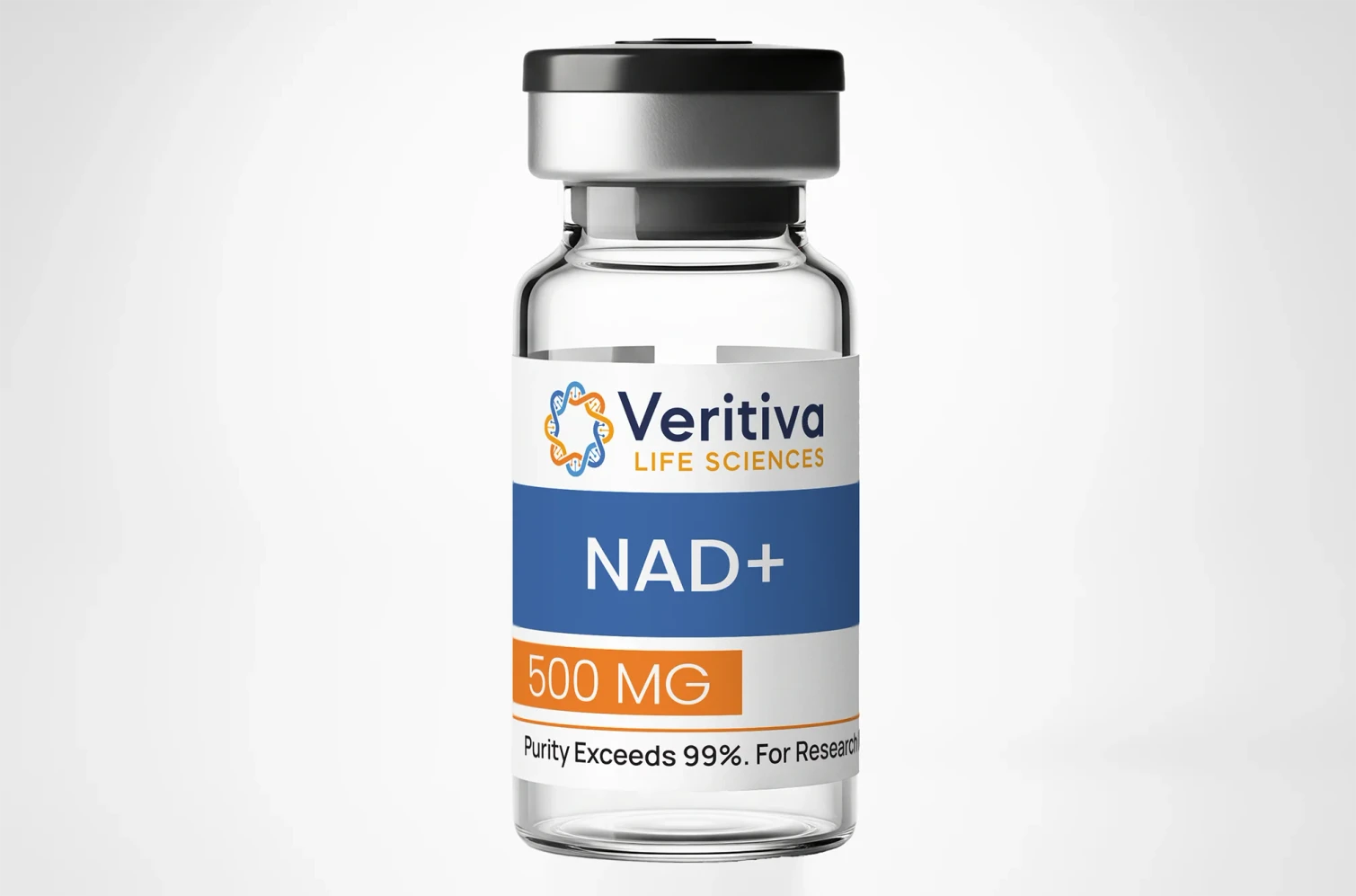
NAD+ (nicotinamide adenine dinucleotide) is a coenzyme found in every living cell. Its structure links two nucleotides, one built on nicotinamide and one built on adenine, through a pyrophosphate bridge. It is a small molecule, not a peptide, and contains no amino acids. This material is supplied in its oxidized form, beta-NAD+.
NAD+ plays two distinct roles in the lab. It cycles between its oxidized (NAD+) and reduced (NADH) states as an electron carrier in glycolysis, the TCA cycle, and oxidative phosphorylation. It is also consumed as a substrate by sirtuin deacetylases, poly(ADP-ribose) polymerases (PARPs), and the NADase CD38. That makes it a standard reagent for in vitro enzyme kinetics, NAD+/NADH ratio assays, and respiration studies in cultured cells and isolated mitochondria.
Each lot is third-party tested and supplied with a Certificate of Analysis.
| Compound class | Dinucleotide coenzyme (not a peptide) |
|---|---|
| Also known as | β-NAD+, Nadide, NAD, Coenzyme I, Diphosphopyridine nucleotide (DPN) |
| Molecular formula | C21H27N7O14P2 |
| Molecular weight | 663.43 g/mol |
| CAS number | 53-84-9 |
| PubChem CID | 5892 |
| Form | Lyophilized powder |
| Purity | >99% by HPLC, per COA |
| Storage | -20°C, sealed, desiccated, and protected from light |
Certificate of Analysis
| Date | Lot | Certificate |
|---|---|---|
| NAD+ - 500mgMay 19, 2026 | 260508NA5005 | View COA |