
Overview
Glutathione Overview
Glutathione is a tripeptide built from three amino acids: glutamic acid, cysteine, and glycine. It is found naturally in most cells. The structure has an unusual feature. Glutamate links to cysteine through its side-chain (gamma) carboxyl group, not the standard alpha position. This makes the molecule resistant to most common peptidases. The reduced form, GSH, carries a free thiol group on its cysteine residue.
That thiol is what makes glutathione so widely used in the lab. It gives up electrons easily, and it becomes glutathione disulfide (GSSG) when oxidized. Researchers measure the GSH to GSSG ratio as a standard readout of cellular redox state. Glutathione is also a cofactor for glutathione peroxidase and glutaredoxin, and the substrate for glutathione S-transferase conjugation reactions. In vitro and preclinical models use it to study thiol-disulfide exchange, reactive oxygen species chemistry, enzyme kinetics, and conjugation of electrophilic compounds in cultured cell lines.
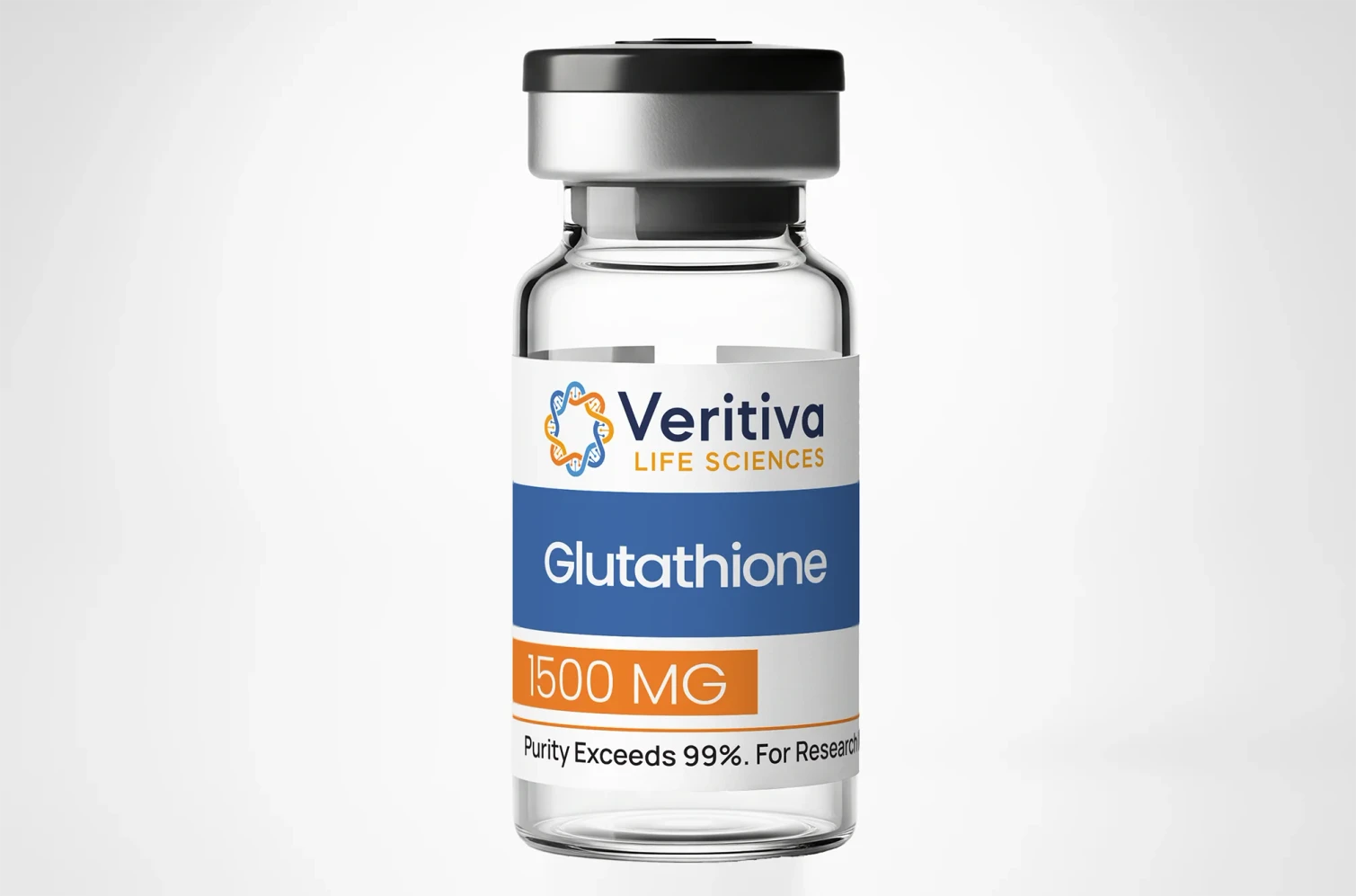
Each lot is third-party tested, and supplied with a Certificate of Analysis.
| Sequence | γ-Glu-Cys-Gly (γ-L-glutamyl-L-cysteinylglycine) |
|---|---|
| Sequence length | 3 amino acids |
| Also known as | GSH, L-Glutathione, Reduced Glutathione, Glutathione-SH |
| Molecular formula | C10H17N3O6S |
| Molecular weight | 307.32 g/mol |
| CAS number | 70-18-8 |
| PubChem CID | 124886 |
| Form | Lyophilized powder |
| Purity | [≥99% by HPLC, per COA] |
| Storage | [-20°C, sealed and protected from light] |
Certificate of Analysis
| Date | Lot | Certificate |
|---|---|---|
| Glutathione - 600mgMar 4, 2026 | TZ20251015 | View COA |