

Overview
Reconstitution Water Overview
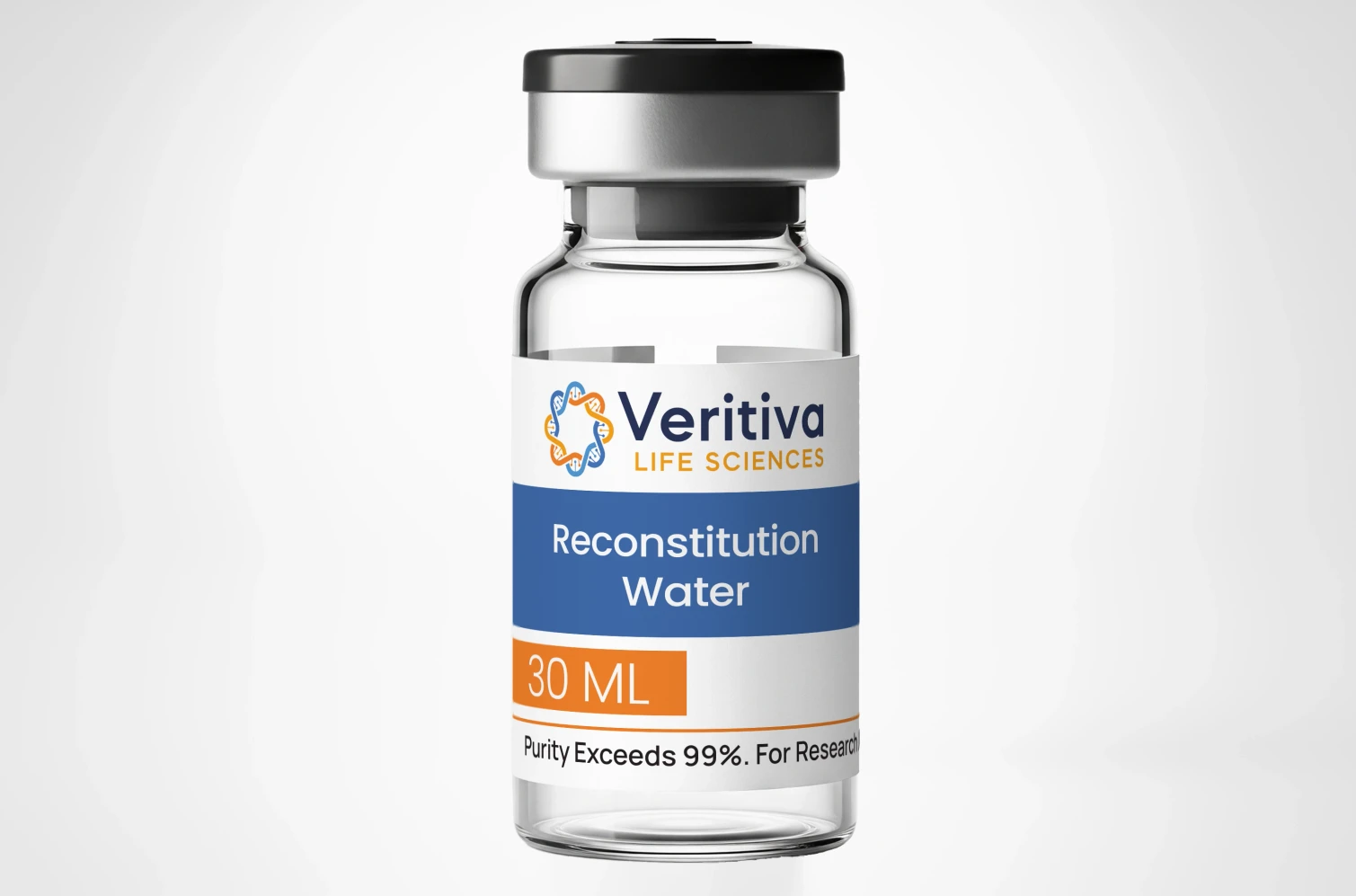
Reconstitution water is sterile, filtered water that contains 0.9% benzyl alcohol. It is a clear, colorless aqueous solution used as a diluent in laboratory settings. The benzyl alcohol acts as a preservative, limiting bacterial growth inside the vial.
Plain sterile water contains no preservative and is intended for a single entry. Reconstitution water is formulated for multi-entry vials, which makes it a common diluent for preparing aqueous solutions of lyophilized research materials in in vitro workflows.
| Also known as | BAC water, bacteriostatic water, preserved sterile water |
|---|---|
| Composition | Sterile water with 0.9% benzyl alcohol (9 mg/mL) |
| Class | Laboratory diluent |
| Form | Sterile aqueous solution in a sealed multi-entry vial |
| Grade | USP grade | Sterile | Multi-Dose Vial |
| Storage | Store unpoened containers at room temperature between 20°C to 25°C (68°F to 77°F). Once the seal has been broken, store in a refrigerator between 2°C to 8°C (36°F to 46°F) to help inhibit bacterial growth. Once punctured, the vial must be discarded after 28 days, regardless of how much liquid remains inside |
| Diluent | Water |
|---|---|
| Molecular formula | H2O |
| Molecular weight | 18.02 g/mol |
| PubChem CID | 962 |
| Preservative | Benzyl alcohol (0.9%) |
| Molecular formula | C7H8O |
| Molecular weight | 108.14 g/mol |
| CAS number | 100-51-6 |
| PubChem CID | 244 |