

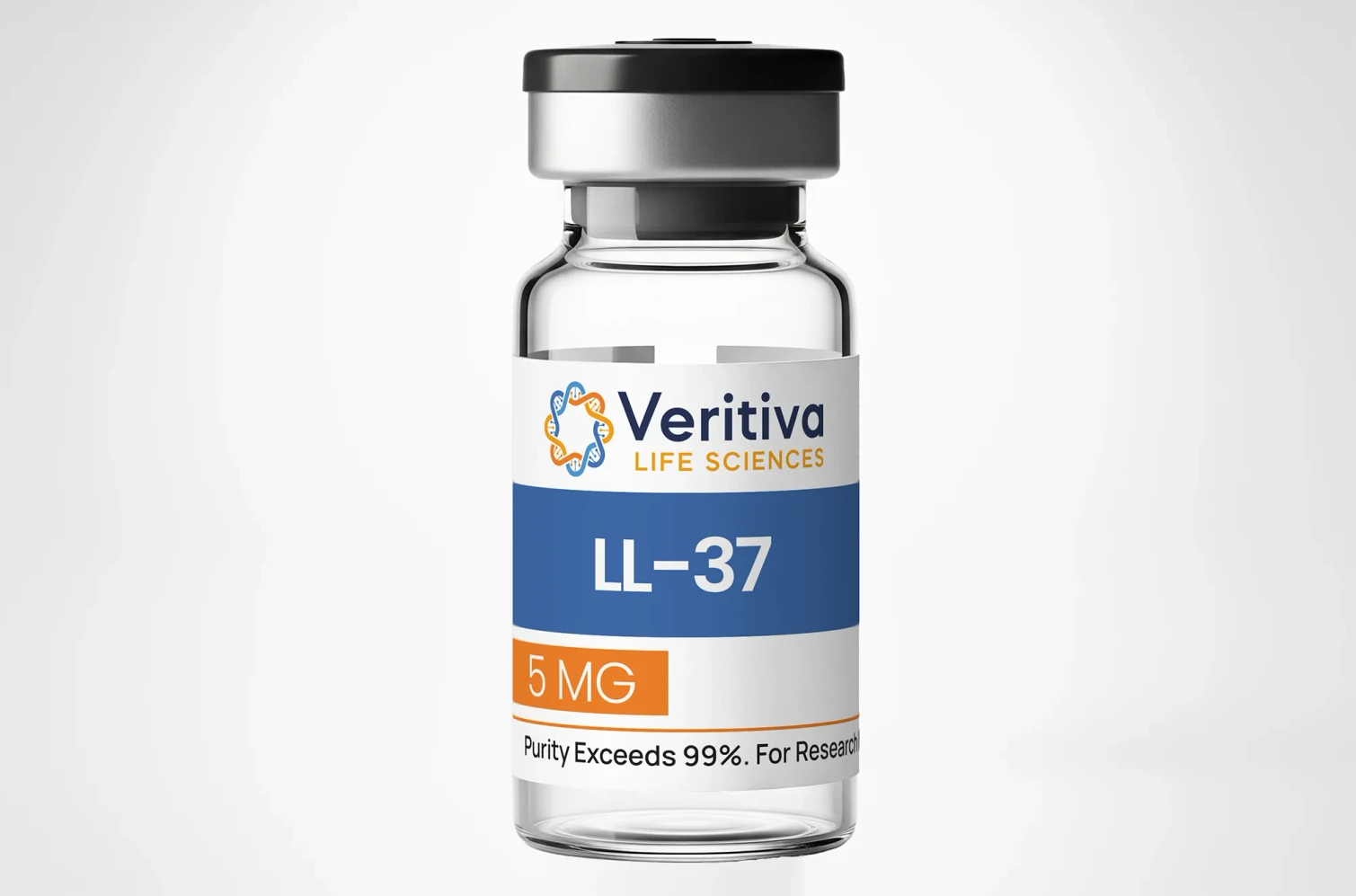
Overview
LL-37 Overview
LL-37 is a 37-residue peptide from the human cathelicidin family. It corresponds to the C-terminal domain of the precursor protein hCAP-18, encoded by the CAMP gene, and is released when that precursor is cleaved. The name comes from its two N-terminal leucine residues and its length.
Its lysine and arginine residues give LL-37 a net charge of +6 at neutral pH. Near lipid membranes, it folds into an amphipathic alpha-helix, with one charged face and one hydrophobic face. This makes it a common reference peptide in host defense peptide research. In vitro and preclinical laboratory models use it to study peptide and lipid bilayer interaction, activity against Gram-positive and Gram-negative reference strains, bacterial biofilm formation, and receptor signaling in cultured cell lines, including formyl peptide receptor-like 1 (FPRL1) and NF-κB pathways.
Each lot is made by solid-phase peptide synthesis, third-party tested, and supplied with a Certificate of Analysis.
| Sequence | LLGDFFRKSKEKIGKEFKRIVQRIKDFLRNLVPRTES |
|---|---|
| Sequence length | 37 amino acids |
| Also known as | LL37, Cathelicidin LL-37, Antimicrobial peptide LL-37 |
| Molecular formula | C205H340N60O53 |
| Molecular weight | 4493 g/mol |
| CAS number | 154947-66-7 |
| PubChem CID | 16198951 |
| Form | Lyophilized powder |
| Purity | >99% |
| Storage | -20°C, sealed and protected from light and moisture |
Certificate of Analysis
| Date | Lot | Certificate |
|---|---|---|
| LL-37 - 5 mgJun 24, 2026 | 260311LL53 | View COA |