
Overview
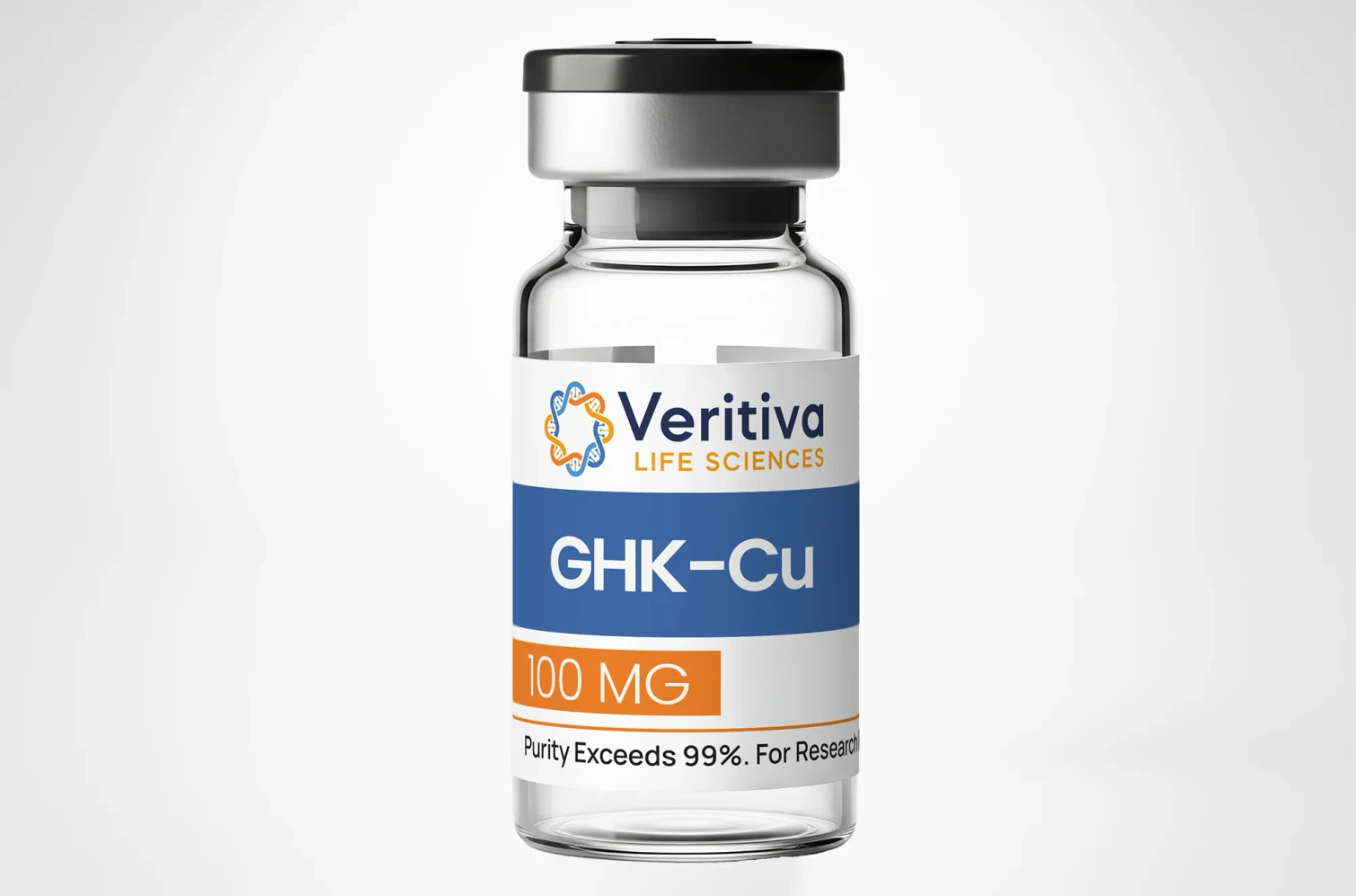
GHK-Cu Overview
GHK-Cu is the copper(II) complex of the tripeptide glycyl-L-histidyl-L-lysine (Gly-His-Lys). The free peptide, GHK, was first identified in human plasma in the 1970s. In the complex, a single copper ion binds one peptide through three nitrogen atoms: the N-terminal amine, a backbone amide, and the histidine imidazole ring.
Its small size and high copper affinity make GHK-Cu one of the most thoroughly characterized metal-binding peptides. In vitro and preclinical laboratory models use it to study copper coordination chemistry, gene-expression profiling in cultured cells, collagen and matrix protein synthesis in fibroblast cultures, and NF-κB, p38 MAPK, and Nrf2 signaling in cell lines. GHK-Cu and free GHK carry separate identifiers. The values below refer to the copper complex.
Each lot is made by solid-phase peptide synthesis, third-party tested, and supplied with a Certificate of Analysis.
| Sequence | Gly-His-Lys (GHK), 1:1 complex with copper(II) |
|---|---|
| Sequence length | 3 amino acids |
| Also known as | Copper tripeptide-1, prezatide copper, GHK copper, glycyl-L-histidyl-L-lysine copper complex |
| Molecular formula | C14H22CuN6O4 |
| Molecular weight | 401.91 g/mol |
| CAS number | 89030-95-5 |
| PubChem CID | 10111685 |
| Form | Lyophilized powder |
| Purity | >99% by HPLC, per COA |
| Storage | -20°C, sealed and protected from light |
Certificate of Analysis
| Date | Lot | Certificate |
|---|---|---|
| GHK-Cu - 50mg11/3/2026 | 26063002 | View COA |